Memories Four decades of Early Childhood Education
Nearly 50 years ago, preschool education was like a child minding undertaking. With the exception of a handful of educators faithful to the tenets of early childhood development, the Hong Kong government did not understand the need for supporting this field. The constant refrain from bureaucrats was “Children should best be cared for in the home”. “Is this field essential or desirable?” They meant that if preschool education was not essential, then it was a luxury not requiring priority status.
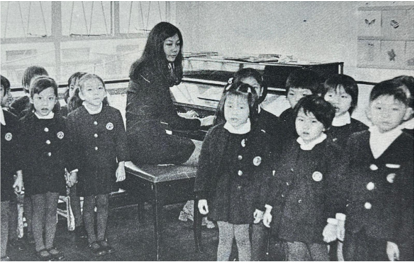
There were almost no provisions for teacher education, except for a course offered in Macau with an intake of only 50 candidates every two years. Government policy was scant and kindergarten education became a rampant commercial industry. Some schools would cram 60 children into one classroom with just one teacher in charge. In those days, a person (usually female) could become a kindergarten teacher having just finished secondary 3, at the age of 16.
Teaching was to rote memorise and little was known about how children learn, the concept of play, or have any knowledge of a child’s natural stages of mental and physical development.
As more parents went into the workforce, kindergartens and child care centres saw an exponential growth. Competition for primary education became fierce. At the age of 6 a child would face a plethora of primary school entrance exams, conducted by well-sought after primary schools. These exams were extraordinarily difficult. As soon as the child reached the age of 5, children and parents alike would live in great anxiety as they prepared the child with exam drills. Publishers did a booming business selling exercise books that crammed disjointed facts into work sheets, much beyond the comprehension of little brains. An example, “how many toes do a man and a dog have altogether?” The answer was “Dogs have no toes.”
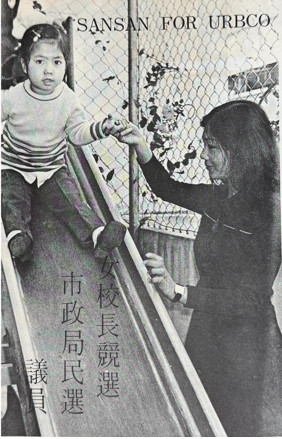
I found a group of like-minded preschool educators back in the 70’s. We pressured government relentlessly through the media and the government consultation machinery to establish an articulated scheme for teacher education, set policies to govern child/teacher and child/space ratios, and offer parents financial subsidies. We called for an overall improvement of Early Childhood Education (ECE) and to ban the terrifying experiences of oral exams in the fight for prestigious primary school entrance. We advised the allocation of places by districts, each district developing its own “prestigious schools”, so that at least transport issues would be reduced, and to alleviate the deleterious effects entrance exams had on children and their families. The government, duly adopted this suggestion and sent officers to monitor student intake to prevent intimidating interviews from taking place.
I then closed my own two kindergartens at the height of a flourishing field, to organise the Council of Early Childhood Education and Services (CECES) with the mission to educate parents and government about the importance of learning through play and developing informal pedagogy, with the purpose to replace senseless rote learning which was the normal practice of instruction at the time.
We achieved our missions over 20 years of consistent advocacy work. Today, our universities are providing education for teachers up to the Doctorate level, aid for teachers and parents, including rental subsidies. Preschool education in Hong Kong has turned several positive and important chapters since 50 years ago.
Children at the preschool age are now receiving education matching global trends. Today, the early childhood field is no longer simply a child-minding machine, but has become a properly acknowledged profession. For this achievement, Hong Kong has to thank numerous hard working early childhood advocates who untiringly pressed government for inspectoral and financial supports for the early childhood field.
The yesteryear Social Welfare and Education Departments that used to run separate and conflicting policies for children aged 2 years 8 months to 6 year olds, which had caused distressing operational inconsistencies, have since merged and harmonised their differences, so that the governance of education and services are now coordinated, and much more administratively reasonable for operators.
Early Childhood Education today is no longer out-moded but is vibrant, dimensional, creative and centred on the child, rather than on school administrative convenience.
Hong Kong has caught up to international expectations in play-based learning, allowing children to explore, discover and role play. Many schools recognise the benefits of social skills development and not focus only on Chinese, English and Arithmetic. School axioms help children manage peer disagreements, controlling emotions, and building collaborative relations.
Government funding encourages schools to care about nature and outdoor learning, helping schools to green their environment, literally growing plants in limited spaces within the school premises. Funding is available for going on school trips to visit places of interest, not only in Hong Kong, but visiting the mother country and establishing sister schools for social and educational exchanges.
Teacher qualifications have seen a tremendous leap since the 1970’s. CECES produced a research document for the establishment of an articulated Hong Kong’s Teacher Education Programme, which the government generally adopted. In addition to producing this document, were many advisory committee meetings with the Education Commission to discuss a Teacher Training System within the tertiary institutions and universities. These moves brought a formerly undisciplined and unskilled teaching force into an internationally aligned dedicated profession.
Whereas, up to the 1970’s and 80’s, teachers coming into the field had no knowledge of child development, teachers today entering the field of ECE must minimally, reach a “Qualified Kindergarten Teacher” (QKT) standard. From this basic requirement teachers can take a Higher Diploma, then the Bachelor, Master, right up to the Doctoral degrees. This determined and steady elevation of teachers have brought the ECE industry on par with world recognised standards.
The way forward in the coming decade is to further look into, and take action, in the education of human values, skills in the use of AI technology, and children’s emotional guardianship. These efforts must accompany a meaningful programme of parents’ education, so that schools and home work in coordination for the health and wellbeing of the coming generation.
*照片由供稿者提供。